What Should You Wear for a Manuel Antonio Waterfall Rappelling Tour?
What Is the Best Outfit for a Manuel Antonio Waterfall Rappelling Tour?
If you want a simple outfit that works for most waterfall adventures, consider this combination:
Top: Lightweight athletic shirt or rash guard
Bottom: Quick-drying shorts or athletic leggings
Swimwear: Swimsuit underneath if swimming is possible
Shoes: Secure closed-toe water or hiking shoes with good traction
Socks: Lightweight moisture-wicking socks if appropriate for your footwear
Extra: Dry clothes and shoes for after the tour
This simple combination gives you flexibility without requiring a large amount of equipment.
Simple Waterfall Rappelling Packing List
Before leaving your hotel, check that you have the essentials.
Wear:
- Comfortable athletic clothing
- Swimsuit if appropriate
- Secure footwear
- Lightweight socks if needed
- Sun protection
Bring:
- Water
- Towel
- Change of clothes
- Extra underwear
- Extra socks
- Waterproof phone protection
- Insect repellent
- Sunscreen
- Small waterproof bag
Leave behind:
- Expensive jewelry
- Unnecessary electronics
- Fragile belongings
- Large bags
- Clothing you do not want to get wet
Always check the specific packing instructions from your tour operator because requirements can vary between quepos waterfall rappelling tours.
What Should You Wear During the Dry Season?
The dry season can bring warmer and sunnier conditions.
Lightweight clothing is particularly comfortable during this time.
A breathable athletic shirt, shorts, comfortable water-friendly shoes, sunglasses for the transportation portions, and sun protection can all be useful.
Even during the dry season, however, you should still expect to encounter water during a waterfall rappelling adventure.
Your clothing should therefore remain suitable for getting wet.
Do You Need Special Rappelling Equipment?
You generally do not need to bring your own rappelling equipment when booking a guided tour.
Tour operators typically provide the equipment required for their specific activity, subject to their own procedures and requirements.
This may include equipment such as a harness and helmet.
Your guide should explain how the equipment works and how to use it before the activity begins.
Your job is primarily to arrive dressed appropriately and follow the instructions provided by the tour operator.
If you have questions about specific equipment, ask before your tour so you know what is included.
What Should You Wear During the Drive?
Your transportation may begin before you reach the waterfall area.
You can travel wearing your adventure clothing from the beginning, or you may have the option to change before the activity.
If you are wearing a swimsuit underneath your clothing, you can easily adapt if swimming becomes part of the itinerary.
Comfort is more important than fashion.
You may be traveling through warm, humid conditions, so lightweight clothing is generally preferable to heavy layers.
What Should You Wear During the Rainy Season?
Costa Rica’s rainy season can make waterfall adventures even wetter.
Rain may be part of your experience, especially when visiting rainforest environments.
During wetter months, quick-drying clothing becomes even more valuable.
You may also encounter:
- Muddy trails
- Wet rocks
- Increased humidity
- Rain showers
- Stronger water flow
This makes appropriate footwear especially important.
If you are visiting during the rainy season, consider bringing an additional dry outfit and using waterproof bags for anything that needs to stay dry.
Always follow the instructions of the tour operator regarding weather and trail conditions.
What Kind of Backpack Should You Use?
A small backpack can be useful for the transportation portion of your tour, but you may not carry it throughout the entire adventure.
Large backpacks can become uncomfortable during climbing and rappelling.
If you need to bring a few personal items, a small lightweight bag is usually more practical.
Waterproof or water-resistant storage is especially helpful.
Remember that anything you bring could potentially get wet.
Before the tour starts, ask your guide where personal belongings should be stored while you are rappelling.
What Should You Leave at the Hotel?
A waterfall rappelling tour is not the place to bring expensive or unnecessary belongings.
Consider leaving behind:
- Expensive jewelry
- Watches
- Large amounts of cash
- Unnecessary electronics
- Large handbags
- Fragile accessories
- Clothing you do not want to get dirty
Water, mud, rocks, and outdoor activity are all part of the experience.
The fewer valuables you bring, the less you have to worry about them.
What About Insect Repellent?
Manuel Antonio and Quepos are surrounded by tropical environments, so insect repellent can be useful.
Apply it before entering the forest and bring a small amount if you need to reapply later.
Avoid carrying large bottles or unnecessary items during the active part of the tour.
A small personal bottle can be enough for the day.
Should You Bring a Waterproof Phone Case?
If you want to take pictures, a waterproof phone case can be extremely useful.
Waterfall environments are exactly what the name suggests: wet.
Your phone can easily be exposed to splashes, rain, spray, or accidental drops.
A waterproof case can allow you to take photos while providing additional protection.
However, do not let photography distract you from safety.
When walking over wet rocks or preparing to rappel, put your phone away and focus on your surroundings and your guide’s instructions.
Some tours may also offer photography services or have guides who can help take pictures at appropriate moments.
What Should You Bring for the Ride Home?
After the rappelling portion of the tour, you may still have transportation before returning to your hotel.
Wet clothing can become uncomfortable during a long drive.
A dry change of clothes can help you feel much more comfortable.
If you have been swimming, consider bringing a towel as well.
A quick-drying microfiber towel is particularly convenient because it takes up little space and does not add much weight to your bag.
Should You Wear Sunscreen?
Yes.
Even though much of the activity may take place in a forested environment, you can still be exposed to sunlight during transportation, hiking, and open sections of the trail.
Apply sunscreen before leaving for the tour and consider bringing additional sunscreen if you will be outdoors for several hours.
If you are swimming, choose sunscreen appropriate for water activities and follow local environmental guidance regarding products used around natural waterways.
A hat can also be useful before or after the rappelling portion of the adventure.
However, a hat may not be practical while wearing certain safety equipment, so listen to your guide about what can be worn during the rappelling portion.
What About Socks?
If you are wearing closed-toe shoes, lightweight synthetic or moisture-wicking socks are a good option.
Avoid thick cotton socks if you expect to get wet. They can absorb water and stay damp for a long time.
Some travelers prefer specialized water socks when using water shoes.
The main goal is to avoid excessive rubbing and discomfort during hiking.
If you are prone to blisters, choose footwear and socks that you have already worn before the trip.
A waterfall tour is not the ideal time to test brand-new shoes.
Bring a Change of Clothes
This is one of the most useful pieces of advice for anyone taking waterfall rappelling tours Manuel Antonio Costa Rica.
Even if you do not plan to swim, there is a good chance your clothing could get wet.
Having a dry outfit waiting for you at the end of the tour can make a big difference.
Consider packing:
- A dry shirt
- Dry shorts or pants
- Fresh underwear
- Dry socks
- A second pair of shoes
- A lightweight towel
Put the clothes in a waterproof or plastic bag so they stay dry during the adventure.
There is nothing better than changing into clean, dry clothing after spending several hours around waterfalls and rainforest trails.
Should You Wear Sandals?
Regular flip-flops are generally not a good choice for waterfall rappelling.
They can slip off your feet, provide little protection, and make walking over uneven terrain more difficult.
Open sandals designed specifically for outdoor water activities can be more secure, but you should check the requirements of your specific tour before choosing them.
If your excursion includes rappelling and hiking, closed-toe footwear with good traction is often the more practical choice.
The goal is to avoid worrying about your shoes while you are concentrating on the adventure.
Should You Bring an Extra Pair of Shoes?
If you have space, bringing a second pair of shoes can be useful.
Your adventure shoes may become wet and muddy, and having dry shoes available for the ride back can make the end of the day more comfortable.
You can leave the extra pair in a secure location or vehicle if the tour operator provides an appropriate place to store belongings.
Do not carry unnecessary items with you while rappelling.
The less you have to worry about during the activity, the easier it is to concentrate on listening to your guide and enjoying the experience.
Are Leggings Good for Waterfall Rappelling?
Yes, athletic leggings can be a practical option for some travelers.
They provide coverage while hiking through the forest and can be comfortable during active movement.
However, make sure the material is suitable for getting wet.
Heavy leggings that absorb lots of water may become uncomfortable. Lightweight athletic leggings or quick-drying hiking pants are generally more practical.
If you prefer shorts, those can also work well, particularly in warm weather.
Your choice ultimately depends on your comfort level, the tour conditions, and how much protection you want from vegetation, sun, and rocks.
What Shoes Should You Wear?
Footwear is one of the most important decisions you will make before a waterfall rappelling tour.
You want shoes that are comfortable for walking and provide good traction on wet surfaces.
Good options can include:
- Water shoes with good traction
- Hiking shoes suitable for wet conditions
- Closed-toe adventure shoes
- Trail shoes with a secure fit
The most important characteristics are traction, stability, and a secure fit.
Waterfall environments can contain wet rocks, uneven trails, mud, and slippery surfaces. A shoe with a good sole can give you better stability than casual sandals.
Should You Wear a Swimsuit?
If swimming or getting into natural pools is part of your tour, wearing a swimsuit underneath your clothing can be a good idea.
A swimsuit gives you an easy option if you decide to enter the water.
For women, a secure one-piece swimsuit or athletic-style swimsuit can work well. For men, swim trunks that fit securely are a practical option.
Keep in mind that waterfall rappelling involves active movement.
You may be climbing, walking, sitting on rocks, or using a harness. For that reason, choose swimwear that stays securely in place rather than something loose or difficult to move in.
If you do not plan to swim, you can still wear a swimsuit underneath your regular adventure clothing in case you get wet.
What Kind of Shirt Should You Wear?
A lightweight athletic shirt is one of the easiest choices for a waterfall adventure.
A moisture-wicking shirt can help move sweat away from your skin while you are hiking through the warm Costa Rican climate.
A lightweight long-sleeve shirt or rash guard can also be useful. It provides additional coverage from the sun and vegetation while remaining comfortable during physical activity.
Some travelers prefer short sleeves because the weather can be warm. Others prefer long sleeves because they provide more coverage.
There is no single perfect choice.
The important thing is that the shirt allows you to move your arms freely and does not become excessively heavy when wet.
Avoid oversized shirts that could get in the way of harnesses or other equipment.
Wear Clothes That Can Get Wet
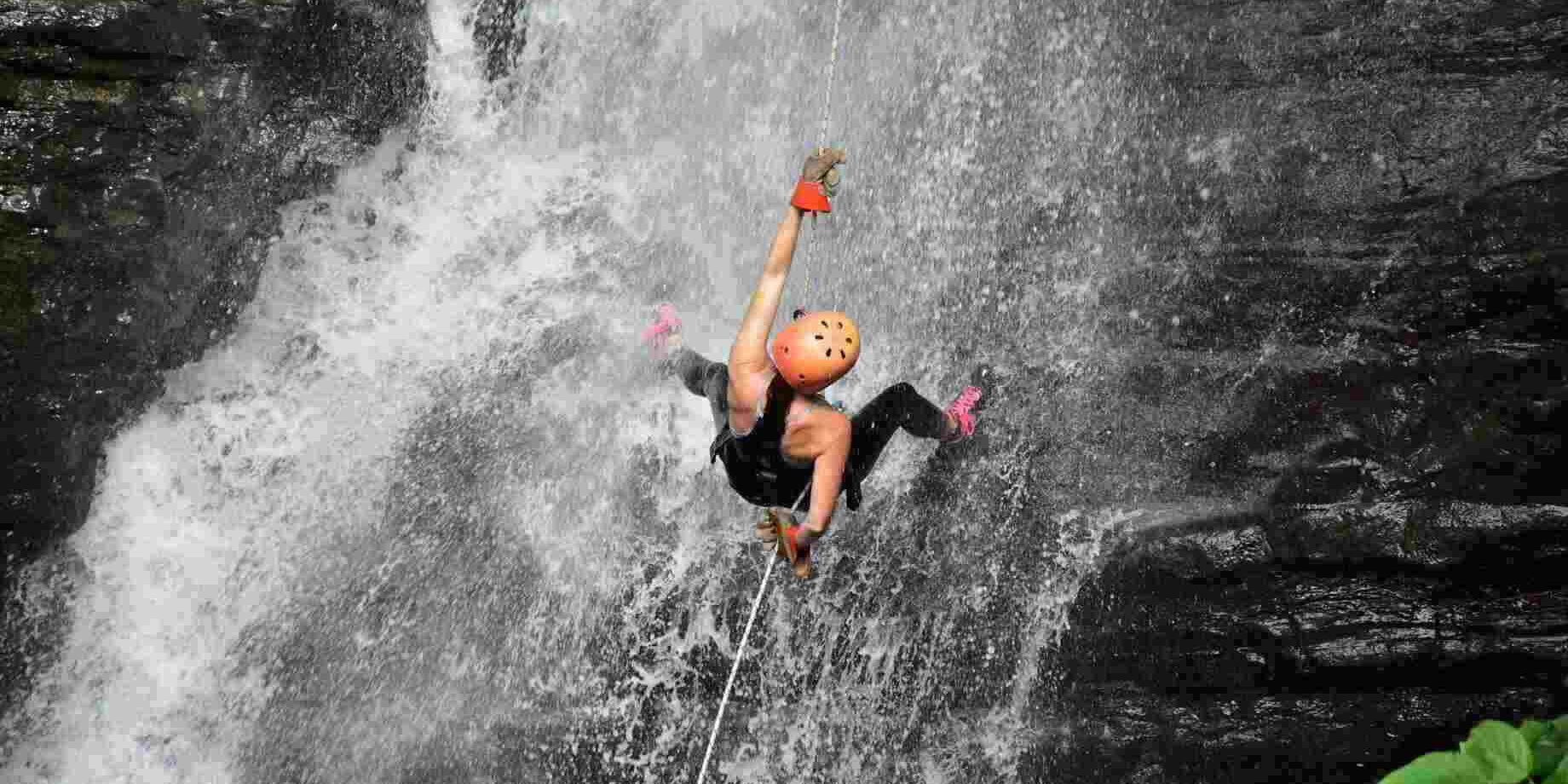
The most important rule when getting dressed for a waterfall rappelling tour is simple: expect to get wet.
Waterfall environments are naturally wet, and even if you do not swim, water can splash onto you while rappelling.
Your clothing should therefore be something you are comfortable wearing in the water.
Good choices include:
- Athletic shorts
- Quick-drying shorts
- Lightweight hiking pants
- Rash guards
- Athletic shirts
- Moisture-wicking shirts
- Lightweight synthetic clothing
Avoid heavy cotton clothing whenever possible.
Cotton can absorb a lot of water and take a long time to dry. Once wet, a heavy cotton shirt or pair of jeans can become uncomfortable and restrict your movement.
Quick-drying materials are much more practical for quepos waterfall rappelling tours because they can dry more quickly after the activity.
What Is a Manuel Antonio Waterfall Rappelling Tour Like?
Before deciding what to wear, it helps to understand what the activity involves.
A waterfall rappelling tour can combine hiking, climbing, rappelling, rainforest exploration, and water activities. Depending on the specific excursion, you may spend part of the day walking through forest trails before reaching the area where the rappelling takes place.
You may also encounter wet rocks, streams, mud, and natural pools.
This means your outfit should be:
- Comfortable
- Lightweight
- Flexible
- Quick-drying
- Secure enough for active movement
- Suitable for getting wet
Think of the experience more like an outdoor adventure than a traditional sightseeing tour.
You do not need to dress formally or wear your nicest vacation clothes. In fact, it is better to choose practical clothing that you will not mind getting wet, dirty, or muddy.
Planning a waterfall adventure during your Costa Rica vacation? If you are booking one of the waterfall rappelling tours Manuel Antonio Costa Rica is known for, choosing the right clothing can make a big difference in your comfort throughout the day.
Waterfall rappelling is more active than a typical sightseeing excursion. You may walk through tropical forest, climb over rocks, get wet, rappel down rock walls, cross streams, and spend time around natural pools. Your clothes and shoes need to handle all of these conditions.
The good news is that you do not need expensive outdoor equipment or specialized clothing to enjoy the experience. With a few practical choices, you can be comfortable, move easily, and avoid worrying about your clothes during the adventure.
This guide explains exactly what to wear, what footwear works best, what to bring if you plan to get wet, and which clothing choices are better left at the hotel.